Radiator Repair and Installation
For seized valves, leaking radiators, and radiators that stay cold despite bleeding.
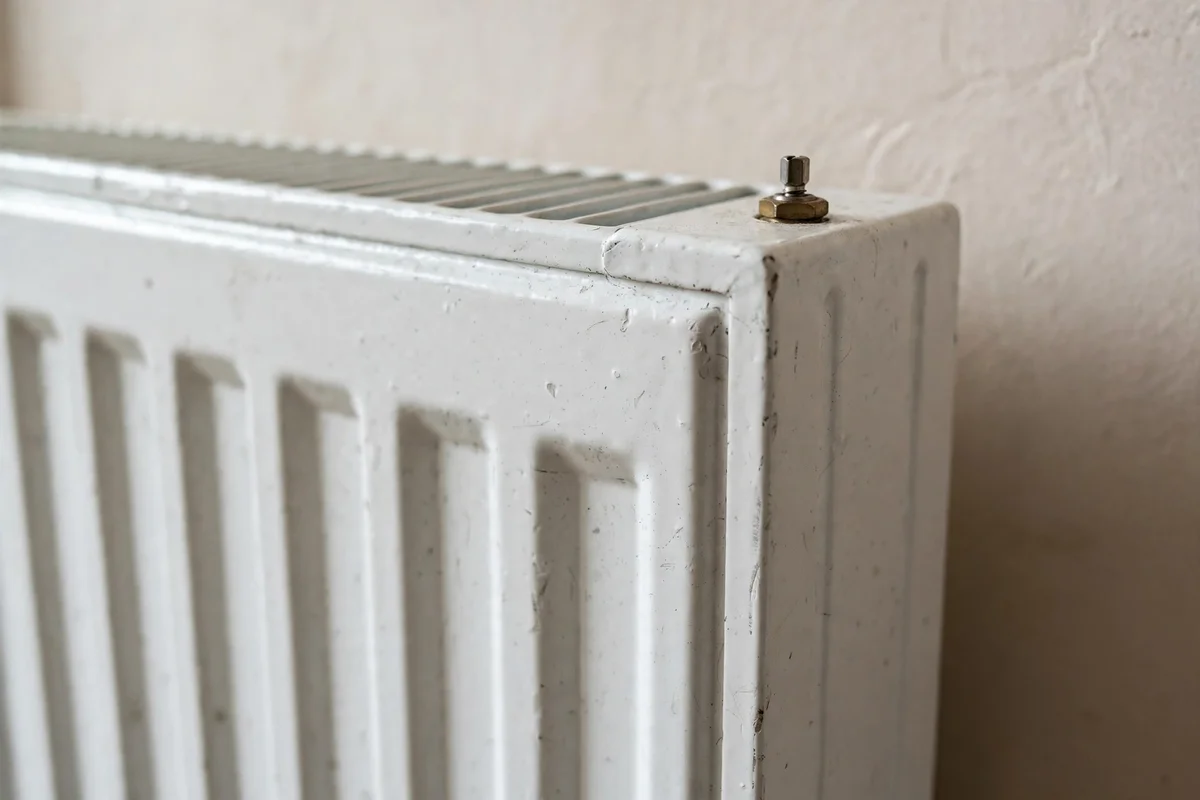
A radiator that stays cold at the top is usually holding trapped air. Learn how to bleed it safely, and what to do if the cold spot comes back.
By Boiler Guard Delaware
Few heating annoyances are as common as a radiator that warms at the bottom and stays cold at the top. That pattern almost always means air is trapped inside, sitting where hot water should be. Bleeding the radiator lets that air out, and the job takes only a few minutes with a simple key and a cloth. This guide walks through the process step by step, covers the mistakes to avoid, and explains what to do when bleeding does not hold.
One more habit helps: after bleeding, run the heating for an hour and walk the house again, feeling each radiator from bottom to top. That second walk confirms the bleed worked, shows whether pressure held, and catches a valve that drips once the system is hot. If a radiator you bled is cold again the next day, note that too, since a fast return points to sludge or a valve fault rather than fresh air. Those observations turn a simple job into useful information for the next step.
If the same radiator goes cold again within days, the cause is deeper than trapped air. Sludge in the system settles in radiators and blocks water flow, and bleeding only removes air, not sludge. A radiator that stays cold at the bottom, rather than the top, also points to sludge, since heavy sediment sinks and blocks the lower channels.
A stuck valve can also mimic trapped air. Thermostatic radiator valves age, and a pin inside can stick shut, starving the radiator of hot water. Tapping the valve body gently sometimes loosens it, but a valve that keeps sticking needs replacing. Note whether the radiator pipe feels hot right up to the valve, since that detail helps us find the fault.
Circulation trouble is the third cause. A tired pump or a closed zone valve can starve radiators far from the boiler, especially upstairs. If several radiators go cold together, or the whole top floor stays cool, the problem sits in the system rather than in one radiator, and it deserves a proper check rather than repeated bleeding.
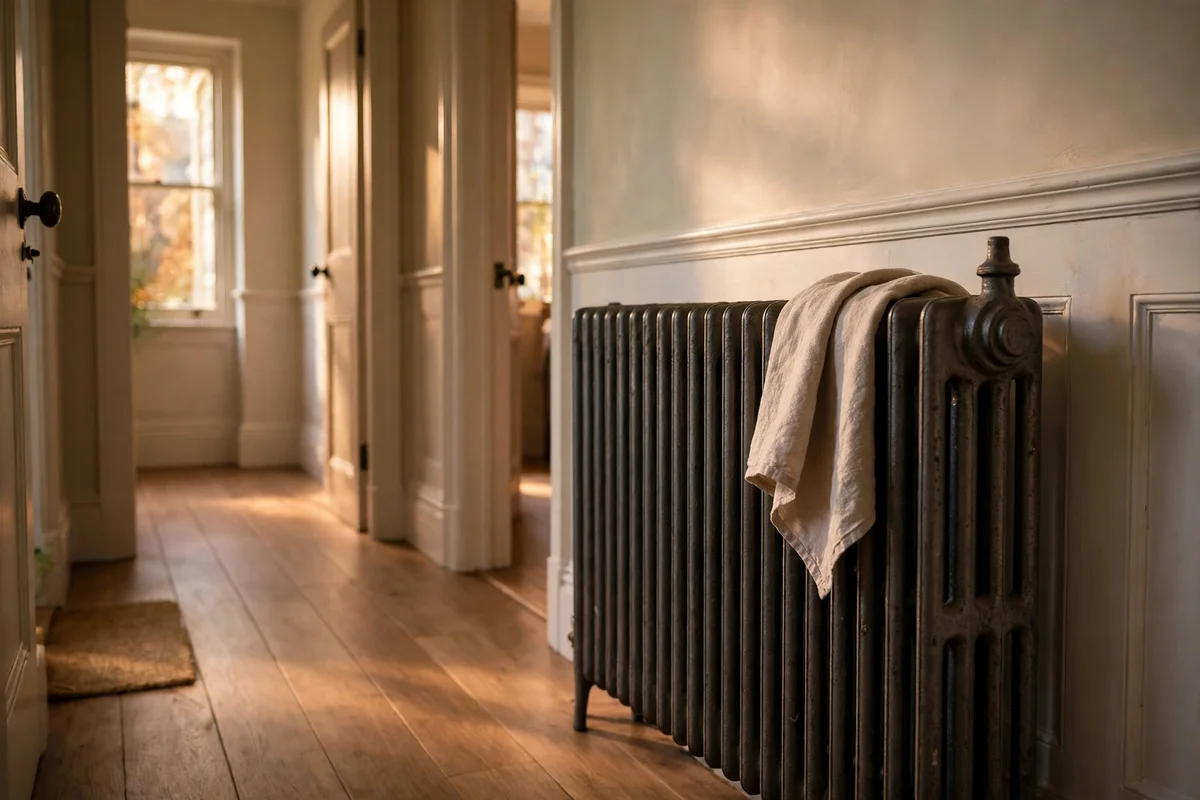
Start with the heating on and the radiators warm, so you can feel which ones hold air. Find the bleed valve, a small square or slotted valve at the top corner of the radiator, with a radiator key and a cloth ready. Turn the key slowly counterclockwise, just a quarter turn, until you hear air hiss out.
Hold the cloth under the valve to catch drips, and wait until water runs steadily without sputtering. That steady stream means the air is out. Close the valve gently, snug but not forced, since overtightening can damage the valve. Wipe the valve dry and check it again after an hour for any slow drip.
Work through the radiators one at a time, starting with the ones farthest from the boiler or on the lowest floor, then moving up through the house. After bleeding, check the boiler pressure gauge, since letting air out drops system pressure. Top the system up through the filling loop if the gauge reads low, following your boiler guide.
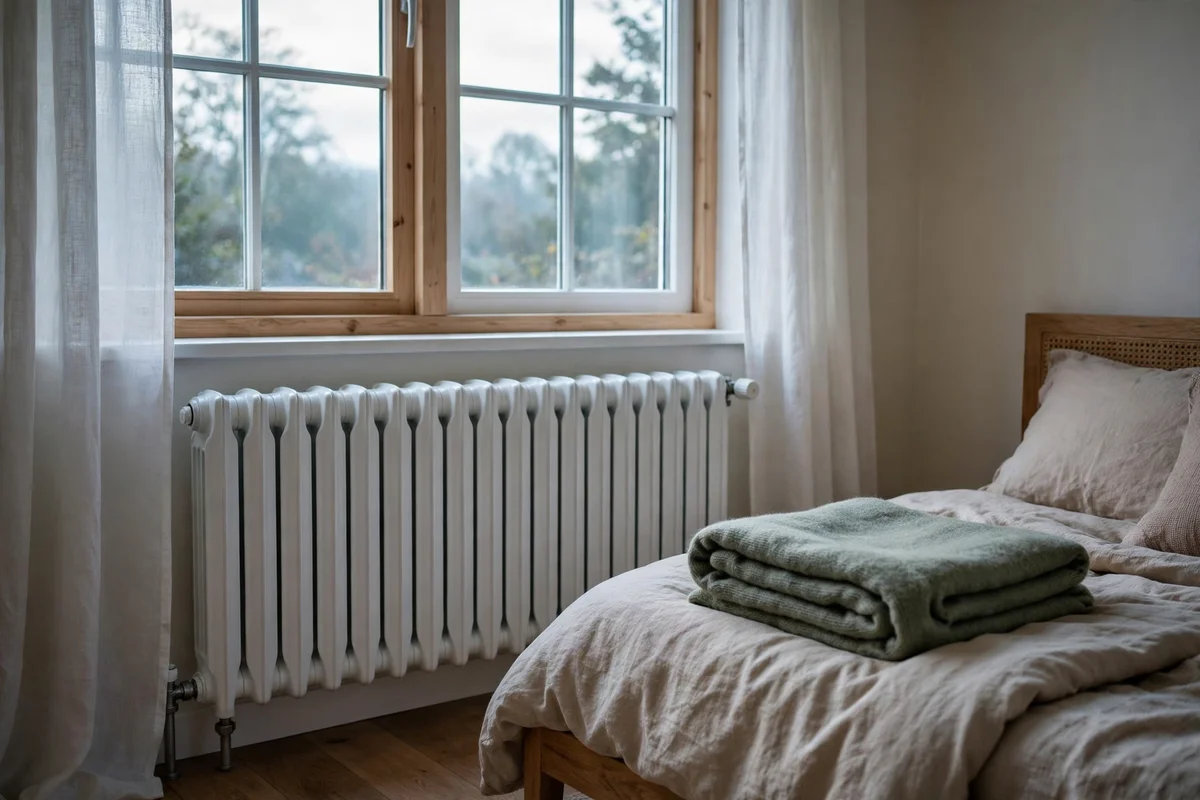
Walk from room to room with the heating on and feel each radiator at the top, the middle, and the bottom, noting which ones are cold and where. A radiator cold only at the top usually holds air, while one cold at the bottom usually holds sludge that bleeding cannot shift. A radiator cold all over points instead to its valves or its feed, and several cold radiators at once point wider, to circulation or balance. That short map tells you whether bleeding is the right job at all, and it gives us a precise description to work from if you call: which radiators, which part of each one, and whether the pattern came back after a previous bleed.
While you map, look at the valves on each cold radiator. A thermostatic radiator valve sets the room temperature, while the lockshield valve on the other end balances flow through the loop, and a pin stuck shut inside either one starves the radiator just as surely as air does. If the pipe feels hot right up to the valve but the radiator stays cold, the valve is the likelier suspect, and that is a radiator repair job rather than another bleed. A radiator that keeps refilling with air, meanwhile, may be drawing it in through a fitting, or the system may carry sludge that a flush would clear.
Air rises to the highest point in a radiator and blocks hot water from filling it, so a radiator cold at the top usually holds trapped air. Bleeding lets that air out, and the radiator then fills with hot water again.
Bleeding a radiator, in order:
Repeated air problems point to radiator repair and installation or to flushing and water treatment, depending on whether the cause sits at the radiator or in the loop.
| What you find | Likely cause | First check |
|---|---|---|
| Cold at the top, warm at the bottom | Trapped air sitting at the top | Bleed that radiator with its vent key |
| Cold at the bottom, warm at the top | Sludge settled in the lower channels | Bleeding will not fix it, ask about a flush |
| Whole radiator cold | Stuck valve or blocked feed | Check the valve, bleed, and test its loop |
| Several radiators cold at once | Circulation or balance fault | Check the pump, the pressure gauge, and balance |
| One room cold while others warm | Valve or balance fault at that room | Bleed, check the valve, and compare rooms |
Call us if a bleed valve is seized or snapped, if water keeps dripping from a valve after bleeding, or if the same radiator keeps going cold despite repeated bleeding. Those signs mean the fault is in a valve, the sludge in the system, or the circulation, and each needs more than a key to fix.
Call sooner if bleeding drops system pressure repeatedly, or if the boiler locks out after you top the pressure up. Pressure that will not hold points to a leak somewhere in the pipework, and finding it early keeps the repair small. Note the gauge reading and how fast it falls, since that detail helps us narrow the search.
For most homes, though, bleeding is a simple skill worth having. Learn where your bleed valves are, keep a key near the boiler, and bleed a cold-topped radiator as soon as you notice it. If the cold spot returns, or anything about the job feels wrong, call us and describe what you found. We serve homes across Delaware, and a quick conversation often tells us the next step. See also our radiator repair and installation guide for details on what that involves.
Bleeding works best when the tools are already at hand. Keep a bleed key beside the boiler, with a cloth and a small jug, so a cold radiator on a winter evening is a short job rather than a search through drawers. Most radiators take a small square key, while some newer valves take a flat screwdriver, and a quick look at your own valves settles which one you need. Add a note by the boiler naming any radiator whose valve sticks, so the next person to bleed it knows to go gently. After any bleed, glance at the pressure gauge and know where the filling loop sits, since topping up is part of the same job and a gauge that keeps falling points to a leak worth a call.
Do not open the bleed valve fully or leave it open while you walk away. A valve opened too far can let water pour out, and a forgotten open valve can drain pressure and flood a floor. Open it just enough to hear air, stay beside it, and close it as soon as water runs steady.
Do not force a stuck valve. Old bleed valves seize, and a forced key can snap the valve or crack the radiator. If a valve will not turn with gentle pressure, leave it and call us. A seized valve is a small repair, while a snapped one can drain the system and soak a room.
Do not bleed radiators with the system cold and expect a clear result. Cold radiators hide air, since the water is not circulating and the air has settled. Run the heating first, feel for cold tops, and bleed only the radiators that show the pattern. Bleeding every radiator on a schedule wastes time and drops pressure for no gain.
Not sure what your system needs?
Call (302) 291-0790Air trapped inside the radiator sits at the top and blocks hot water from reaching it, so the bottom warms while the top stays cold. Bleeding the radiator lets that air out and restores even heat. If the same radiator keeps going cold, sludge or a valve fault may be behind it.
Only when they show cold tops, not on a fixed schedule. A radiator that heats evenly has no air worth removing, and bleeding it only drops system pressure. Check radiators when the heating first comes on in autumn, and bleed the ones holding air.
Most radiators use a small square bleed key, sold cheaply at hardware stores, while some newer valves take a flat screwdriver. Keep the key near the boiler so it is at hand when a radiator goes cold. If the valve is a different shape, a photo of it helps us tell you the right tool.
One cold radiator is a radiator job, not a boiler failure
When one radiator stays cold while the rest warm up, start at that radiator: its valve, its air, and its feed. When several radiators go cold together, look wider, at the pump, the pressure, and the balance of the loop. The count of cold radiators is the clue that separates the two.
Hold a cloth and a small jug under the bleed valve, open the valve only a quarter turn, and close it as soon as water runs steadily. A cloth catches the first drips, and staying beside the valve keeps a slow job from becoming a flood. Wipe the valve dry and check it again after an hour.
Repeated cold tops usually mean sludge, a sticking valve, or circulation trouble rather than fresh air. Sludge blocks water flow, a stuck valve starves the radiator, and a tired pump starves rooms far from the boiler. Note the pattern and call us, since each cause needs a different fix.
Yes, bleeding a radiator is a safe homeowner job when done gently and with the heating on. Open the valve a little, catch drips with a cloth, and close it when water runs steady. Leave seized or dripping valves alone, and call us rather than forcing a valve that will not turn.
Yes, letting air out also lets a little water out, and system pressure falls with it. Check the gauge after bleeding and top the system up through the filling loop if the reading is low. If pressure keeps falling after topping up, a leak may be present and deserves a check.
A bleed key is a small tool that fits the square spindle of a radiator bleed valve. Turning it opens the valve a fraction, letting trapped air escape. Most hardware stores sell them, and keeping one near the boiler means a cold radiator can be fixed in minutes.
Cold at the bottom usually means sludge, since heavy sediment sinks and blocks the lower channels of the radiator. Bleeding will not fix it, since bleeding removes air from the top. A system flush clears sludge, and we can check whether the radiator or the wider system needs it.
Describe the pattern, top cold or bottom cold, and whether it keeps coming back. We will find the cause behind it.
For seized valves, leaking radiators, and radiators that stay cold despite bleeding.
When sludge blocks radiators, a flush clears the system and restores even heat.
The wider warning signs, from uneven heat and new noises to lockouts.
Last updated: October 26, 2026.