System Flushing and Water Treatment
Clean water that keeps radiators heating evenly and protects the heat exchanger.
Learn more →
A boiler that gets steady care starts cleanly, heats evenly, and gives warning before a small fault becomes a cold house. This visit is that steady care, done once a season.
A maintenance report is more useful than a simple pass or fail note, because it records readings, wear, and watch points that together describe boiler health over time. Read it as a trend, not as a single verdict. Read it as a trend across seasons.
Pressure readings, burner condition, ignition wear, pump behavior, and control settings each tell part of the story, and a change in one reading between seasons often matters more than the reading alone. A pressure reading that falls a little further each season points to a slow leak, while a burner that soils faster each season points to a combustion or venting drift. Watch points in the report are items that are worn but still working, and replacing them during a planned visit is calmer and simpler than replacing them during a breakdown. Ask us to explain any reading or note you do not understand, and keep reports together season by season, because a future technician who can see the trend can diagnose faster and advise with more confidence than one who sees only the latest visit. A report that is filed and dated is easy to find when a future fault needs context, and a report that is lost leaves the next technician starting from scratch.
Between visits, the boiler itself gives the earliest warnings, and owners who notice them early save themselves a breakdown. The signs are small, and they are easy to miss when heat still works. Keep that note ready for the visit, because patterns help diagnosis more than single events.
Pressure that falls week by week, radiators that need bleeding often, a burner that takes several tries to light, or rooms that heat unevenly all point to a system drifting out of tune. New noises, such as kettling or banging, fresh water near the boiler, or a pilot or ignition that behaves differently from last season also deserve a call. None of these signs means the boiler will fail tomorrow, but each one is cheaper and simpler to fix early than after a shutdown. Keep a short note of when a sign started and whether it is getting worse, and share that note during the visit or on the call.
Safety signs need a different response. If a carbon monoxide alarm sounds, leave the building and call emergency services from outside. The Environmental Protection Agency explains carbon monoxide sources in homes, including worn combustion equipment, and the Centers for Disease Control and Prevention covers alarms and symptoms. Check alarm batteries and placement as part of household routine, and never ignore an alarm to see if it stops on its own.
Heating season coming up? Call (302) 291-0790 and get the boiler checked first.
Call (302) 291-0790A yearly visit catches the faults that only sustained running reveals: stuck pumps, tired vents, weak ignition, and valves that have not moved since last winter. The autumn check matters most, since it happens before the heating season asks everything of the system at once.
| Topic | First option | Second option |
|---|---|---|
| Burner and ignition | Weak ignition | Fails on the first cold night |
| Pump and circulation | A circulator that hums without turning | Seized after summer idleness |
| Vents and valves | Vents that hissed all last season | Valves that stuck shut |
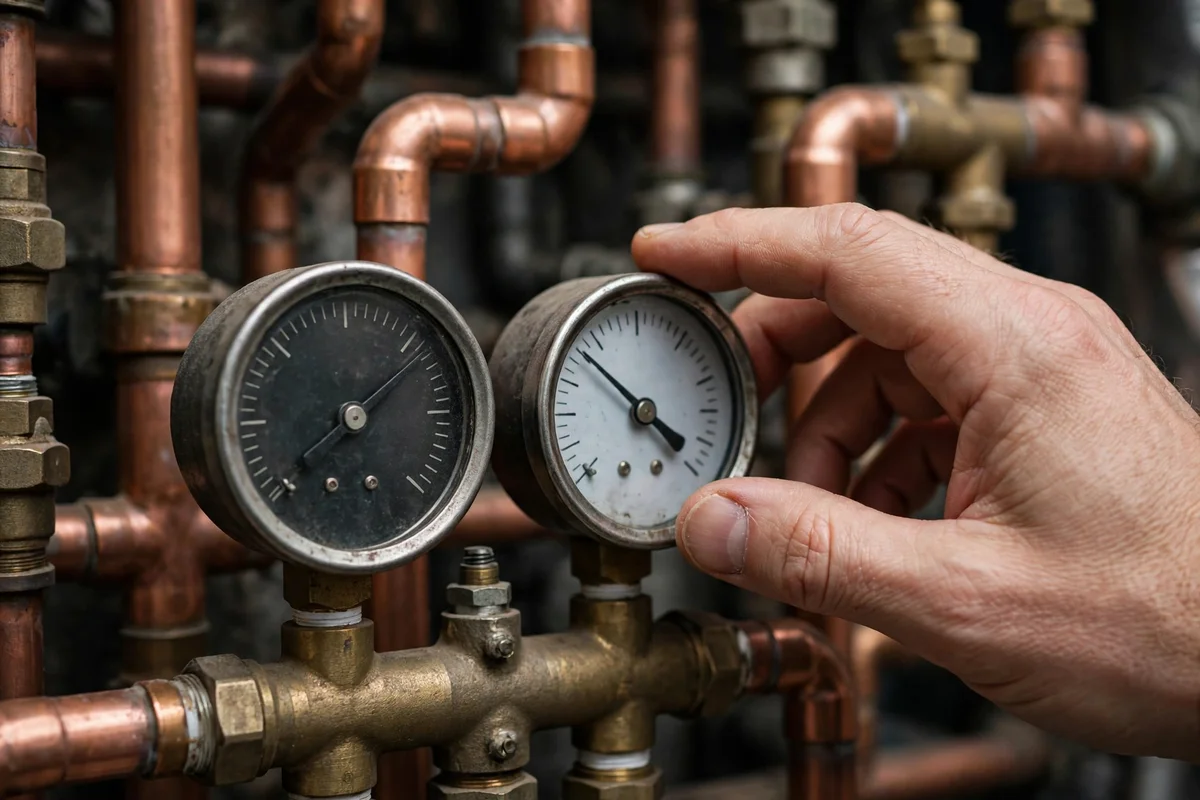
| Controls and pressure | A gauge that drifts | Controls that call at the wrong time |
Autumn is the main check
Fire the system from cold, bleed every radiator, test the controls, and watch a full heat cycle from startup to shutdown, so the first cold night brings no surprise.
This work comes up most often in seasonal checks in Dover, tune-ups in Seaford, and maintenance visits in Milford, though the same maintenance approach applies anywhere in Delaware. The same yearly rhythm also serves seasonal maintenance in Newark and tune-up visits in Elsmere. Your town page explains the local housing and conditions that shape the job.
A maintenance visit is a full check of the boiler and its nearby controls, not a quick glance at the display. We inspect, clean, test, and adjust, then tell you what we found in plain words. Tell us about any room that heats unevenly before the visit starts.
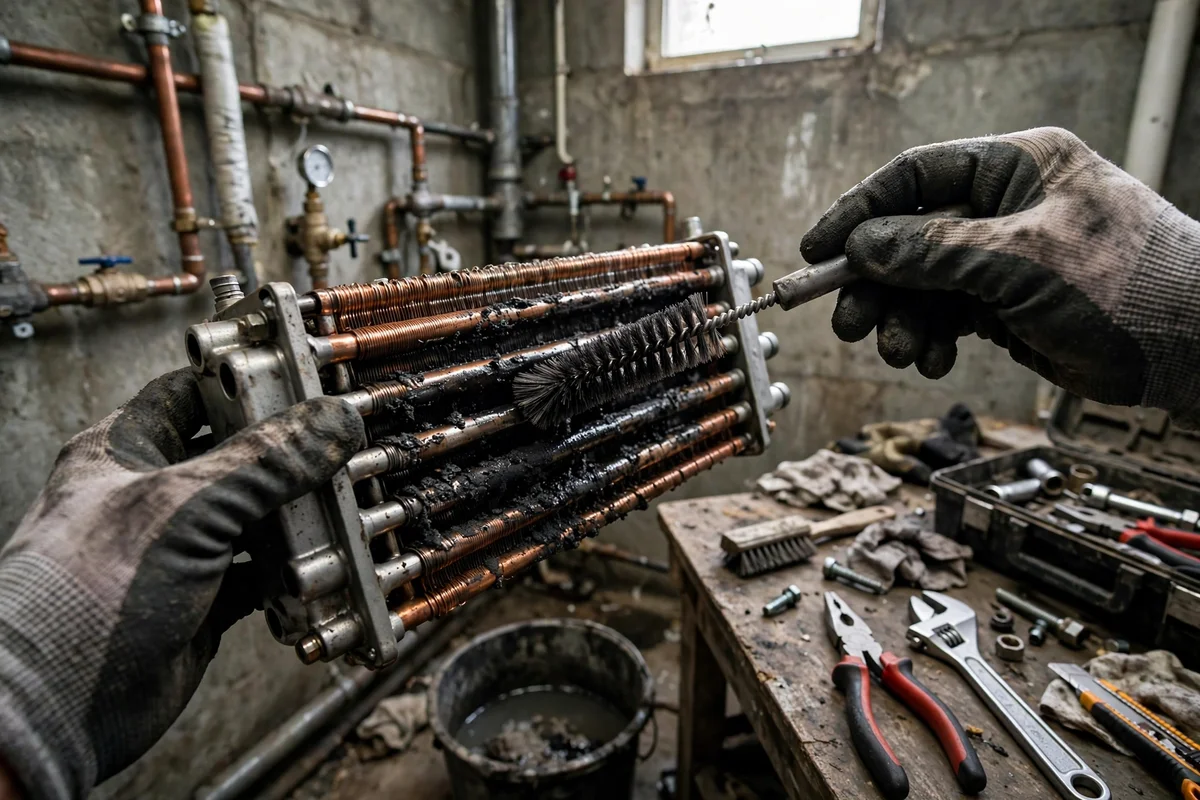
We clean the burner and heat exchange surfaces where soot and debris collect, check ignition parts for wear, and inspect seals and joints for leaks. The pump, expansion vessel, pressure relief route, and safety controls are tested, and the flue route is checked for blockage or damage. Water pressure is noted, radiators are spot-checked for cold patches, and the thermostat is compared with actual room temperatures. Anything worn, leaking, or out of adjustment is pointed out and explained, with a clear note of what needs attention now and what can wait for a later visit.
The tune-up part of the visit sets the boiler back to the maker settings. Burner settings are checked, controls are tested through a full heating cycle, and zone valves are watched as they open and close. A boiler that is clean and correctly set burns more steadily, heats rooms more evenly, and puts less strain on the pump and ignition parts. Owners often notice the difference in how quickly rooms warm up and how quietly the boiler runs after the visit, rather than in any single dramatic change.
The best time for maintenance is before the heating season, when a fault found on a mild day is a repair, not a cold-night problem. A visit in late summer or early autumn leaves time to fix what we find.
Boilers sit idle through warm months, and that rest can hide slow leaks, stuck valves, and ignition parts that have stiffened. The first cold snap then asks the boiler for full output after months of rest, which is when worn parts tend to fail. A pre-season visit wakes the system gently: we run it, watch it, and fix small faults while the house is still warm enough to manage without heat for a short spell. Businesses face the same pattern, with staff and customers depending on heat from the first cold morning, so a pre-season check protects the working day as well as the home evening.
Once a season is enough for most boilers, but systems with older pipework, hard water, or heavy use benefit from a conversation about more frequent checks. We base that advice on what we see during the visit, such as dirty water, frequent pressure drops, or emitters that heat unevenly. A maintenance visit is also the right moment to talk about system flushing and water treatment if the water looks dark, or about boiler controls and zone heating if some rooms never match the thermostat. Timing the visit before winter turns maintenance from a chore into a safeguard.
Due for a boiler service? Call (302) 291-0790 and book a maintenance visit.
Call (302) 291-0790A maintenance visit works through the system in a fixed order, so nothing that wears on a schedule gets skipped.
The visit ends with a plain list of anything to watch, so the next season holds no surprises.
A boiler in a second home or a house left empty for weeks needs a different routine from one in daily use. Water sitting still in the system, valves left in one position for months, and a boiler that never fires through the warm season can each turn a quiet house into a cold-night problem on the first visit back.
Ask us about the settings to leave the system on while you are away, and about a check timed for shortly before you return, so any fault found on a mild day is a repair rather than a welcome-home surprise. Tell us how long the house stands empty and whether anyone looks in during that time, and we can shape the visit around it.
A short written record after each visit turns maintenance from a vague chore into a clear history. We leave you with notes on what was cleaned, tested, and adjusted, and what to watch before the next visit. Bring the record to the next visit so trends are easy to compare.
That record helps the next technician spot a pattern, such as pressure falling a little further each season, or a valve that sticks every autumn. It also helps owners plan: a part noted as worn but still working can be replaced during a planned visit, rather than during a breakdown. Keep the record with the boiler instructions, and note the date of the visit so the next one is easy to schedule. We serve homes and businesses across Delaware, and our service areas page shows where we work.
Maintenance pairs naturally with other steady care. If radiators heat unevenly, ask about flushing during the same visit window. If the thermostat never seems to match room temperatures, ask about controls. If the boiler is ageing and breakdowns are becoming regular, ask us to compare maintenance with boiler replacement honestly, so the decision is made on a warm day with full information, not on a cold night under pressure.
A building with several flats or units asks more of a maintenance visit than a single home, because one boiler serves rooms with different schedules, different thermostats, and different ideas of warm enough. We check the shared plant first, then work through the zones unit by unit, so a fault in one flat does not get mistaken for a fault in the boiler itself.
Access matters as much as engineering here. Agreeing a visit window that opens every unit, and leaving us a note on which rooms each household has flagged, keeps the visit to one trip instead of several. The report then gives the building manager one clear picture: what was cleaned and tested, what to watch, and which unit needs a follow-up visit.
For the checks owners can handle themselves between visits, see our winter maintenance checklist and our guide to how often a boiler needs servicing.
Heat exchanger. The surfaces that pass burner heat into the water. Soot and debris collect here first, and cleaning them restores heat transfer the boiler loses gradually. Water quality found during the visit may also point to a system flush.
Ignition electrode. The part that lights the burner. Wear here shows up as a burner that takes several tries to light, long before it fails outright.
Expansion vessel. The cushion that absorbs pressure change as water heats and cools. A vessel that has lost its charge leaves pressure swinging with every cycle.
Pressure relief valve. The safety route that opens if pressure climbs too high. We check that its route is clear and that it seats again after testing.
Condensate trap. The water seal on the drain of a condensing boiler. A blocked trap can shut the boiler down, which is why it earns a check on every visit.
Most boilers benefit from a service once a season, ideally before the heating season starts. Older systems, systems with dirty water, or boilers that run heavily may need a conversation about more frequent checks. We base that advice on what the visit finds, not on a fixed schedule for every building.
Maintenance is planned care: cleaning, testing, and adjusting a working boiler to keep it running well. A repair fixes a part that has already failed or a fault that has already appeared. Maintenance often prevents repairs, but it does not replace a repair once a part has broken.
Sometimes. A tune-up can fix airlocks, balancing, and control faults that leave radiators cold. Radiators that stay cold because of sludge, blocked valves, or undersized emitters need flushing or emitter work as well, and we explain which path fits what we find.
A tune-up includes cleaning the burner and heat exchange surfaces, checking ignition parts, testing safety controls, checking the pump and expansion vessel, inspecting the flue, and setting the boiler to maker settings. We then run a full heating cycle and note anything worn or leaking.
Before the heating season, in late summer or early autumn, is the best time. Faults found then can be fixed while the building is still warm, and the boiler enters winter clean, tested, and adjusted. Any fault found is worth noting, so it can be fixed while the building is still warm.
Clear access to the boiler, and note any rooms that heat unevenly, radiators that need bleeding often, or noises that have changed. That short note helps us focus the visit on the parts of the system that concern you most.
No visit can stop every breakdown, because parts can fail without warning. Maintenance lowers the risk by catching wear, dirt, leaks, and control faults early, and it gives you a clear record of boiler condition season by season. Pressure trends and radiator patterns are worth noting season by season.
Yes, and often more so. Older boilers collect more soot, wear ignition parts sooner, and hide slow leaks more easily. A visit checks those exact points and gives an honest view of whether the boiler is still worth maintaining or should be compared with replacement.
Yes. We maintain boilers in homes and businesses across Delaware. For larger buildings, we check zone controls and multiple emitters, and we plan the visit around building use so heating disruption stays minimal. Zone count and building use are worth noting, so the visit can be planned.
A clean, tested boiler enters winter ready. Call us and book a maintenance visit before the cold arrives.
Clean water that keeps radiators heating evenly and protects the heat exchanger.
Learn more →Ongoing care for the hot water boiler systems behind radiators and baseboards.
Learn more →Specialist care for steam boilers, traps, vents, and steam radiators.
Learn more →Last updated: October 26, 2026.